Search this site
- Enjoy Darwin
- Bird Watching
Common Garden Birds in Darwin
Common garden birds photographed in suburban Darwin including doves, finches, fig birds, honey eaters and lorrikeets.
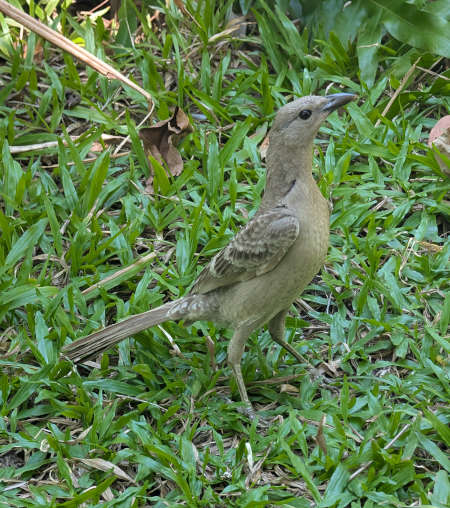 Great Bowerbird is an occasional visitor to the garden.
With plenty of water available to keep tropical gardens green, birds of all sorts are attracted to the housing areas as well as the public gardens and parks.
Darwin is a "must do" for birdwatchers with plenty to see in the suburbs and unique environments close by in Fogg Dam, Kakadu and the Mary and Adelaide river systems.
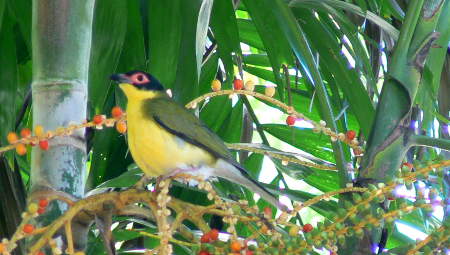
Black cockatoo's are frequent visitors, flashing their brilliant yellow tails in flight.
I think this is actually a Red-Tailed Cockatoo as the Yellow-Tailed variety only extends as far north as mid QLD.
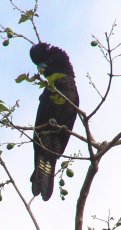 Black Cockatoo
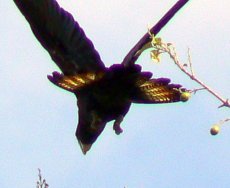 Flashing yellow-red tail
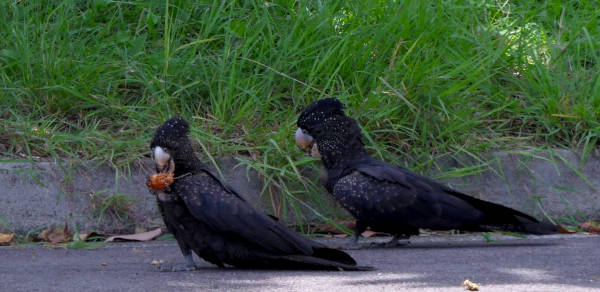 Black cockatoo feasting on nuts on the roadside.
Sulphur-Crested cockatoos visit from time to time, feeding on seeds, berries, nuts and roots.
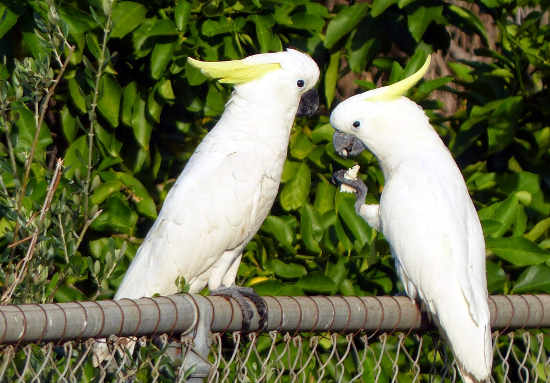 Sulphur Crested Cockatoos - happy to enjoy a free lunch.
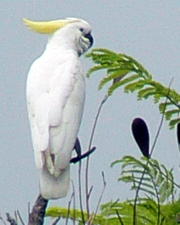 Cockatoo on Tree top
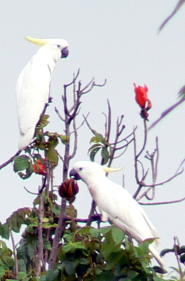 Feeding Cockatoos
A cockatiel looks out on a brilliant green visitor attracted by a free lunch. Thanks to Claire for identifying this as an Indian Ringneck, a popular cage bird introduced into Australia. Maybe this one escaped?
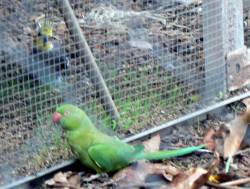 Visiting parrot
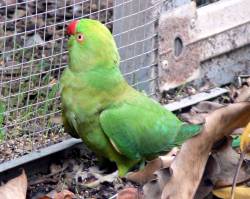 Indian Ringneck
This pair of Red-winged Parrots was photographed just behind the University.
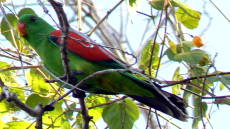 Red-winged Parrot
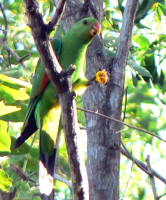 Female Red Winged
Masked Lapwing Plovers are part of the scenery all year round, nesting in the buildup season around October-November.
They become quite aggressive when they have eggs or chicks to protect. The nests are a simple depression in the ground and easy to walk past without noticing.
As you approach the nesting bird will make quite a display of being hurt and lead you way from the nest. If you get too close they will make swooping attacks to discourage you further.
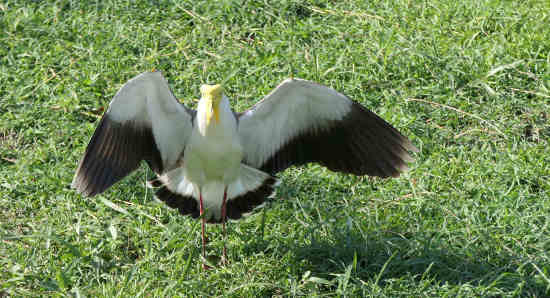 A lapwing plover says "that's close enough"
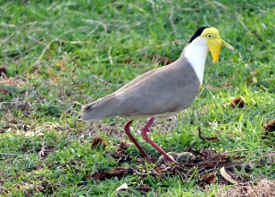 Lapwing and nest
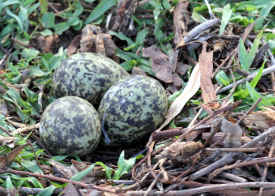 Three plover eggs in a nest.
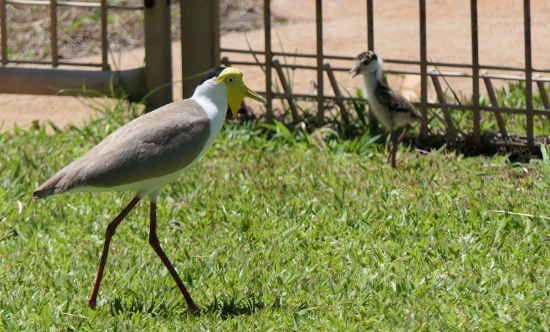 Adult plover and chick
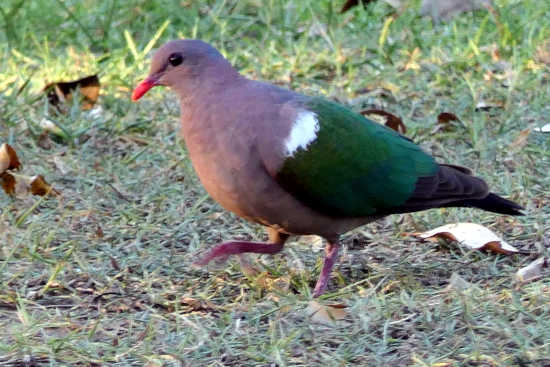 Emerald Dove
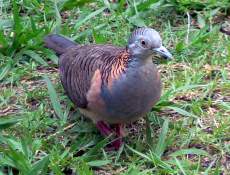 Bar Shouldered Dove
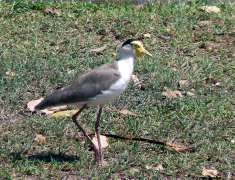 Masked Lapwing
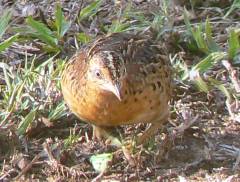 Red-Backed Button-Quail
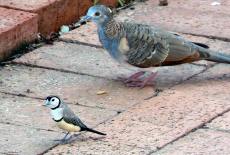 Dove and
Double-barred Finch
Dove and
Double-barred Finch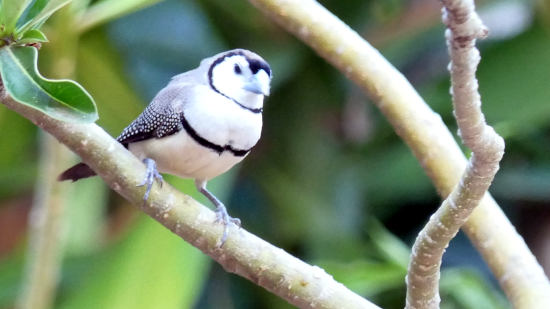 Double-barred Finch perched on a Desert Rose.
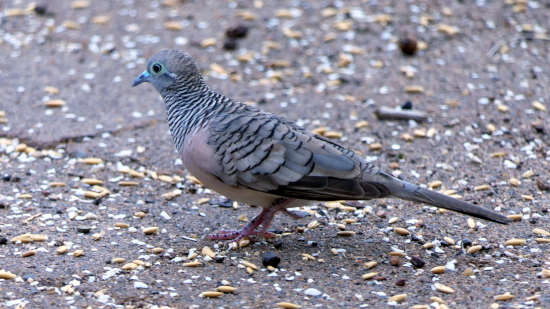 Peaceful Dove - similar appearance but about half the size of the Bar-shouldered Dove
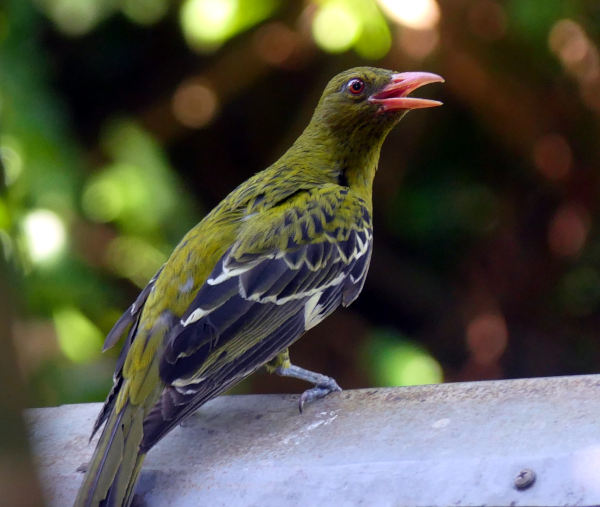 Green Oriole has a loud whistle and a pretty wrble
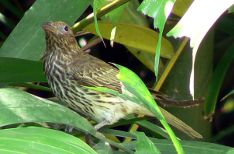 Olive Backed Oriole
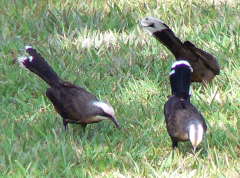 Grey-Crowned Babblers feeding on the grass in Nightcliff
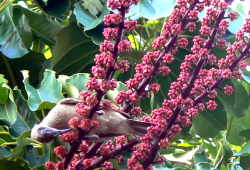 Helmeted Friarbird
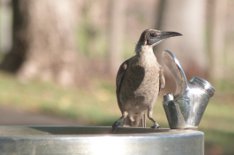 Little Friarbird
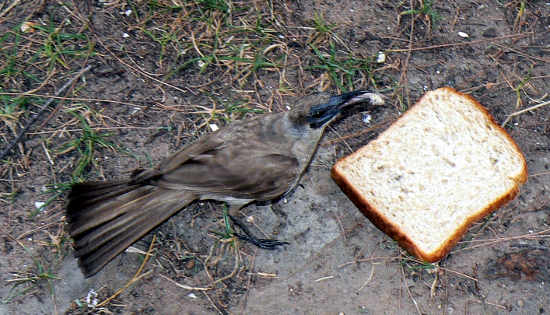 Little Friarbird enjoys a free lunch.
(below) Two birds I can't really identify. Maybe warbler taking a shower, and another small finch in the bushes at Rapid Creek.
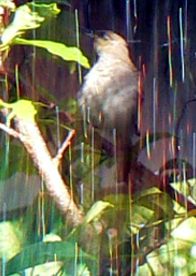 Warbler? enjoying a shower.
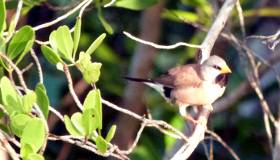 Unidentified finch at Rapid Creek
Thanks Chris for the suggestion this could be a Long Tailed Finch.
Not a very clear photo, but seems a good pick.
The Slater Field Guide lists 53 different Honeyeaters and many look quite similar just from the illustrations.
Another honeyeater which is a common garden bird, I thought a Brown Honeyeater, or as suggested, a Dusky Honeyeater (thanks Keith).
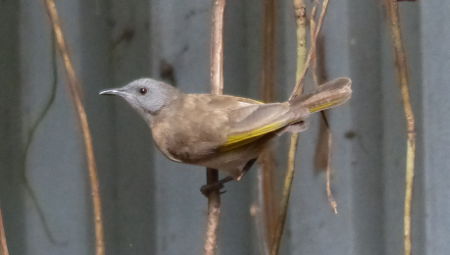
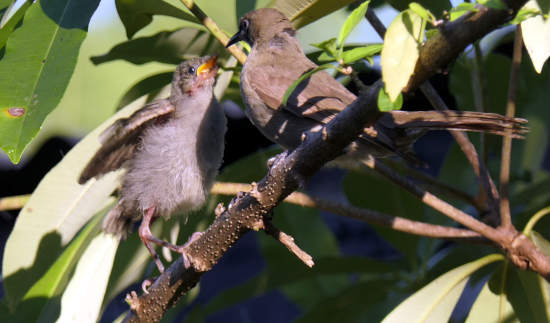 Honeyeater and chick
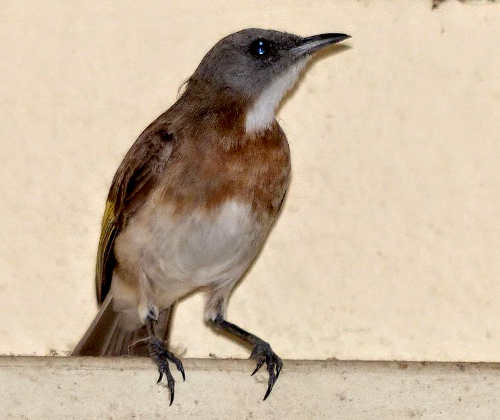 This one flew into a building by mistake - Rufus Banded Honeyeater
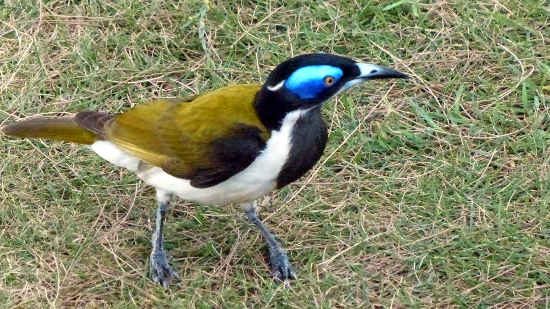 Blue Faced Honeyeater - one of the most colourful honeyeaters
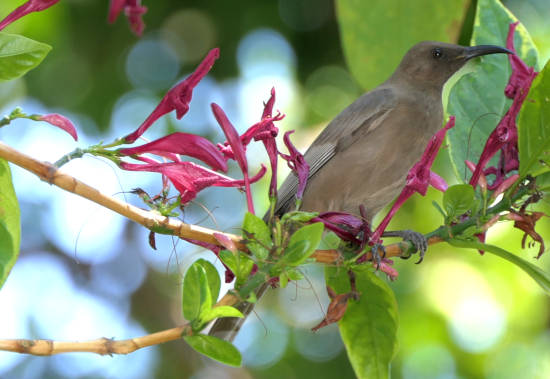 Dusky Honeyeater
The white bellied cuckoo shrike (below) visits frequently, this one has just caught a grasshopper.
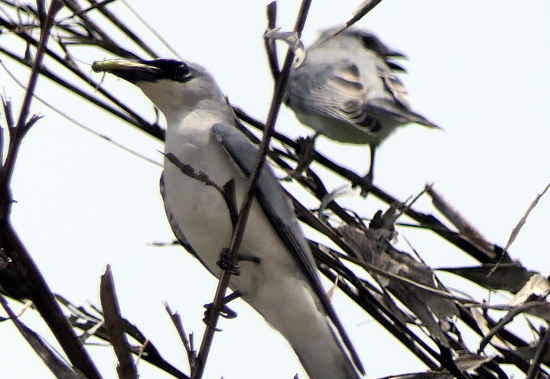 A White bellied Cuckoo Shrike with locust.
See more of Darwins Birds and some of the water birds often seen in the creeks and tidal areas around the suburbs.
The Northern territory Field Guide is a free app that can help you identify over 600 species of.. "everything from colourful birds, iconic fish and mammals, dangerous snakes and crocs, through to butterflies, tiny termites and wasps."
Usually a nocturnal visitor, this young fruit bat hung around for a daytime visit. The evening skies are sometimes filled with thousands making their way to feeding on any nectar or fruit they can find.
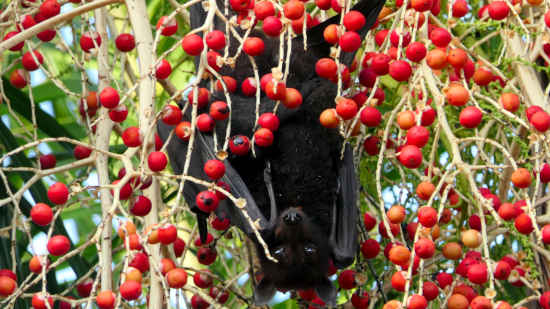 It might not have feathers, but it flys very well.
Return from Darwin Garden Birds to Enjoy Darwin Home.
Recent Articles


-
The Leea
 The Leea Darwin 64 Cavenagh St Darwin City NT, 0800 hello@theleea.com.au (08) 8946 0111 Open 24 hours theleea.com.au Experience the best of Darwin
 -
Yvette Young
 Yvette plays 'well known and loved' cover songs ranging from Kenny Rogers to Pink and everything in between. With over 30 years professional experience
 -
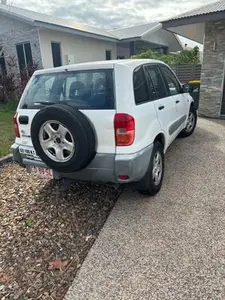
RAV 4
 Automatic Aircon Good working condition Good interior and body New tinting
 -
NTFL Womens Premier League 2024-25
 NTFL Womens Premier League 2024-25


Darwin Community
Add your own Information or Comment on Articles in these Community Pages.
Community
- Art & Craft
- Clubs & Groups
- Community Forum
- Fishing
- Fishing Clubs
- Musicians
- Social Dancing
- Sports & Recreation
- Survival Guide
- Venues for Hire
Buy/Sell
History

 Community Banks® return profits to the community.